
Digital Authorship Registration in 2026: The Role of Timestamp in Musical Authenticity
How Digital Date and Time Stamping Transforms Authorship Validation in the Brazilian Landscape
Redação Música 360º
Redação Música 360º
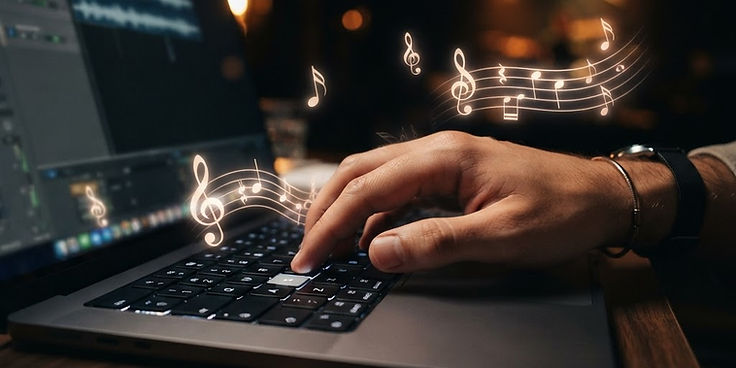
Brazilian composers and producers are experiencing decisive transformations in 2026 when it comes to securing the authorship of their works. Digital authorship registration, already established as a practice among artists from various segments, now sees the use of timestamp—a digital authentication mechanism for dates and times—take center stage in the validation and legal protection of creations.
Timestamp authentication not only provides documentary precision about the moment a work is fixed: it adds evidentiary strength to the digital registration, making each music file or lyric three times more robust in a potential authorship dispute. This technology, aligned with international standards and the growing digitalization of the Brazilian music market, has become a strategic differentiator for those seeking authorship shielding and transparency in contracts or future negotiations.
What Changes in Musical Authorship Protection in 2026
In 2026, the flow of digitally registered new creations is greater than ever. The use of timestamp has become an indispensable technical layer in registrations. In courts and in the daily routine of copyright professionals, the precision of digital registration authenticated by date and time corresponds to a documentary proof of the highest value, often decisive in resolving disputes.
The security of the timestamp lies in its impossibility of manipulation—unlike regular emails or files saved on a computer, whose metadata can be edited, timestamp certification ensures the integrity of the information from the moment it is fixed. For composers working independently or for artistic collectives producing in remote collaboration, this security represents not only protection but also clarity in partnerships and co-authorship contracts.
Evolution of Digital Registration in the Global Scenario
Globally, authenticated digital registration follows standard guidelines that aim to ensure interoperability between systems, including consensus on timestamps in decentralized networks (such as blockchains). In Brazil, the adoption of these solutions is advancing under the close watch of the legal sector, marked by intense disputes over intellectual property—especially in the face of the accelerated circulation of songs, beats, and lyrics on social networks, on-demand music platforms, and shared files.
The relevance of the timestamp has become evident as artists began to release previews, demos, and unreleased compositions simultaneously across multiple digital environments. The challenge today is not only to protect the final work—but to establish, for all parties involved, a clear authorship trail from the earliest versions of the creative process.
Analysis: The Impacts of Timestamp for Composers and Producers
For independent artists, authenticated digital registration with timestamp ensures autonomy by avoiding intermediaries and offers speed without losing legal backing. Producers and publishers see this mechanism as an ally in formalizing assignment or licensing contracts, reducing litigation risks and increasing confidence in negotiations.
Unlike traditional models based only on physical records or protocols without temporal certification, digital registration with timestamp creates concrete evidence of priority—which can be audited, presented in court, and referenced in various transactions. In 2026, this structure is seen as decisive in cases of plagiarism, co-authorship disputes, and demands for recognition of intellectual work.
The protection provided goes beyond proof of authorship: by unequivocally attesting to the moment when the music or lyric was created or finalized, the timestamp serves as a basis for clarifying contractual conflicts and defining rights, obligations, and revenue sharing.
New Challenges and Attention to Critical Details
Although technology brings advances, there are critical points in the use of digital authorship registration with timestamp. The main risk falls on improvised workflows, where the artist believes they are protected simply by saving files in the cloud or exchanging emails. Such errors create documentary gaps and, in dispute situations, are rarely recognized as robust evidence.
Another challenge is the traceability of versions of the same work: composers do not always keep clear records of modifications, alternating sections, instruments, or collaborations. Professional management of this history is fundamental and requires discipline, especially in the Brazilian scenario, where remote collaborations have become the rule rather than the exception.
The Grupo Música 360º Service: Digital Registration with Technical Certification
Grupo Música 360º provides the complete Digital Authorship Registration service with technical timestamp certification, ensuring maximum legal protection, credibility, and integration of creative workflows. Personalized service includes guidance on documentation, file selection criteria, versioning best practices, and the preparation of evidence that truly makes a difference in contracts and copyright disputes. By handling each stage of registration, the Grupo Música 360º team eliminates the risk of technical gaps, making life easier for composers, lyricists, performers, and producers who operate in the digital environment and wish to shield their repertoire before public release or during negotiations.
Contact Grupo Música 360º via WhatsApp to present your project and ensure your works are protected from the very first version. The process is end-to-end: from initial advisory to secure archiving, with documentation that withstands legal audits and validations in different instances of the music market.
Practical Paths for the Digital Artist in 2026
Digital authorship registration with timestamp is not a barrier, but rather the safest path for the composer who wants to build sustainable value from their production, regardless of size or musical genre. Market experience shows that those who invest in robust documentation handled by professionals not only increase the protection of their creations but also their access to public notices, sync contracts, festivals, and international opportunities.
Given the volatility of the digital environment and the growing risks of misappropriation, control over authorship evidence makes a real difference in the fate of careers and works. Artists who recognize the value of authenticated digital registration expand their field of action and enhance their trajectory with security, leaving behind the fragility of improvised practices.
The era of informality is in the past: in 2026, digital date and time stamping represents the watershed between protected works and announced litigation cases. Digital authorship registration is, above all, a declaration of professionalism to the market.
Grupo Música 360º
Sua música também pode chegar mais longe.
O Grupo Música 360º trabalha com divulgação musical e produção de conteúdo para artistas, bandas, produtores e gravadoras. Fale com a nossa equipe pelo WhatsApp e apresente o seu projeto.