
How to Prove You Are the Author of a Song in 2026: Evidence, Paths, and Safe Decisions
From Traditional Registrations to the Digital Era: Real Evidence, Legal Criteria, and Guidance for Active Songwriters
Redação Música 360º
Redação Música 360º
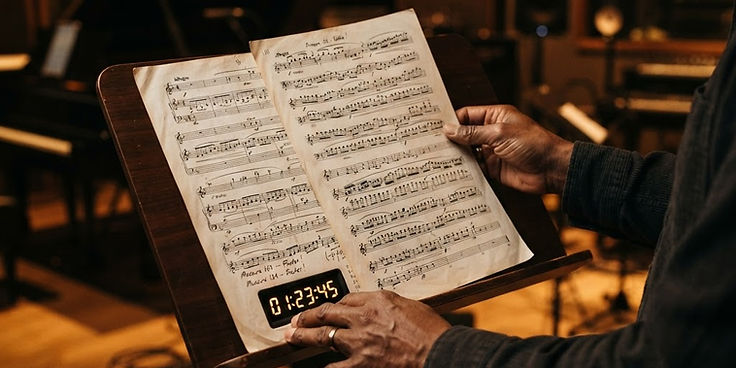
Throughout 2026, proving the authorship of a song has become central among the challenges faced by performers, songwriters, and producers in an increasingly digital and competitive market. Situations involving accusations of plagiarism, legal disputes, and even monetization blocks on platforms show that the mere existence of an idea is not enough: it is necessary to formally prove the authorship of the musical work before partners, registration bodies, and the legal system.
This question affects both novice authors and market veterans: what evidence truly guarantees that a song is yours, what paths are legally accepted, and how can you avoid pitfalls that may prove costly years later?
What is valid as proof of authorship in 2026?
Contrary to popular belief, the digital era has not simplified the task of proving musical authorship. The traditional registration of sheet music or lyrics at a notary office remains an alternative, but it is not the only reality in the new market. Emails sending the composition to third parties, audio files with verifiable dates, work versions saved in the cloud since 2026, and publications on platforms with robust authentication have gained strength as documentary evidence—as long as it is possible to demonstrate precedence and authenticity.
However, recent court decisions continue to value documents issued by recognized bodies, such as the Public Registry of Works, which provides dated certificates with public faith. Digital authentication (via blockchain or NFTs) has started to enter the courts' radar, but there are still discussions about its robustness when used alone, especially in cases of collaboratively created works or those with multiple development stages.
When evidence is not enough: disputes, deadlocks, and ignored risks
Without clear documentation, artists remain exposed to cross-claims of co-authorship, partnership disputes, and loss of the right to recognition and profits generated by the work. In many authorship lawsuits judged in 2026, judges analyze everything from messages exchanged between producers to metadata from digital files. However, the lack of formalization can lead to unfavorable interpretations and lengthy proceedings.
Another overlooked point is the risk of the composer themselves being accused of violating third-party works: the absence of solid evidence of authorship opens the door to investigations, blocks, and even preventive suspension on digital platforms and publishers. In the Brazilian scenario of 2026, traceability of creation has become a requirement even for aggregators and distributors during artist onboarding—impacting remuneration, show schedules, and career reputation.
Evaluation criteria and available paths
The most solid documentation remains the registration certificate issued by an official body, detailing authorship, date, and any rights sharing. However, complementary evidence—such as dated videos of the creative process, audios sent by email to recognized professionals, documented conversations in apps, and specific contracts—can be decisive in resolving disputes.
In 2026, it is essential to understand that no digital mechanism alone replaces official documentation in copyright litigation. Platforms and social networks may serve as an indication of priority, but do not carry sufficient legal weight, especially if challenged in court.
The role of Grupo Música 360º in formalizing musical authorship
Grupo Música 360º operates throughout the process of documenting and registering musical authorship, assisting artists, songwriters, and producers in structuring a concrete and legally recognized dossier for each work. The Registrar Música service goes beyond simply filling out documents: it involves context analysis, guidance on accepted evidence, mediation with registration bodies, and personalized support in potential disputes or co-authorships, always prioritizing the integrity of the process and the peace of mind of the artist.
In practice, Grupo Música 360º provides guidance on real deadlines, steps, and crucial details to avoid future problems. From checking ownership, through proper formalization of partnerships, to delivering official certificates and all complementary documentation, the team ensures traceability and recognition of the artist's copyright. To present your project and clarify questions about proving musical authorship, contact Grupo Música 360º via WhatsApp.
Practical developments: what to do in the face of deadlocks or authorship doubts
In cases of ongoing disputes, gathering as much documentation as possible is essential: original recordings, message exchanges, dated versions, and prior contracts are valuable instruments. It is common not to know the deadline for presenting such evidence—and the longer the delay, the lower the chances of legal success. Quick action and guidance from specialized professionals can make the difference between preserving or losing copyright and financial rights.
For new projects, the recommendation is to structure a formal path even before public release: official registrations, transparent co-authorship agreements, and digitally traceable dossiers. This strengthens not only the legal recognition of authorship but also the market value of the work, in a scenario where festivals, platforms, and licensing contracts increasingly demand guarantees.
Market, trends, and the future of authorship in 2026
The rise of virtual partnerships, the advancement of generative AI, and new standards for digital contracts impose unprecedented requirements on those who compose or invest in music. The debate about authorship is no longer limited to the realm of copyright: it involves career planning, monetization, and reputation. Formal proof of musical authorship has become not only a defense but an asset for negotiating with record labels, publishers, advertisers, and international synchronizations.
Ignoring documentary requirements is no longer an option—especially in a market that rewards, above all, those who can prove ownership of their own creation. The professional songwriter of 2026 understands the importance of every formal step. And those who still see the procedure as bureaucracy tend to experience, in practice, the consequences of a market that does not forgive a lack of planning.
Grupo Música 360º
Sua música também pode chegar mais longe.
O Grupo Música 360º trabalha com divulgação musical e produção de conteúdo para artistas, bandas, produtores e gravadoras. Fale com a nossa equipe pelo WhatsApp e apresente o seu projeto.