
How to Register a Musical Beat in 2026: Criteria, Process, and Real Protection for Beatmakers
Definitive guide for beatmakers to protect their rhythmic creations and secure their place in the market
Redação Música 360º
Redação Música 360º
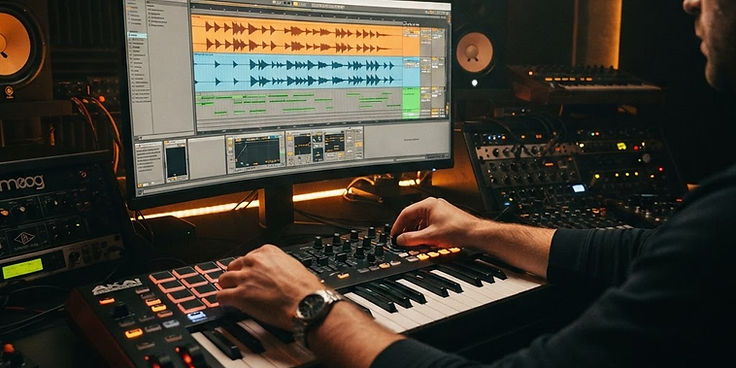
The production of beats has brought Brazilian music to new authorial dynamics in 2026. It is no longer enough to release an original beat or launch collaborations: without proper registration, the risk of misappropriation and legal disputes grows every week. The registration of musical beats, once a topic restricted to major studios, has become a daily concern for independent producers, hip hop veterans, and digital creators in the electronic and pop scenes.
Current Overview of Musical Beat Registration
In 2026, the beat is no longer a mere accessory in music production and is often the creative core in rap, trap, funk, electropop, and similar tracks. The appreciation of the beatmaker follows not only technological advances but also the professionalization of the sector. However, copyright law, although it provides protection for musical works in general, presents nuances when it comes to beats: the distinction between an original beat and a generic rhythmic sequence still sparks legal debates and high-profile cases in courts and on platforms.
With the rise in disputes over credits and royalties, especially in online collaborations, creators' main concern is to anticipate the protection of their authorship. The formal registration of beats has become the main shield against ambiguous interpretations of what does or does not constitute rhythmic plagiarism.
Criteria for Registering a Musical Beat in 2026
Registering a beat involves more than simply exporting an audio loop: it requires minimum proof of originality—whether through rhythmic structure, instrumental composition, combination of percussive elements, or melodic approach applied to rhythm. Brazilian legal understanding does not recognize a generic beat (for example, a 4x4 drum loop without variation or unique identity) as an authorial work eligible for individual registration.
However, from the moment the beat presents clear creative elements—be it through the novel use of samples, organic melodic fragments, or innovative digital manipulation—registration is fully applicable. It is in these technical nuances that the true distinction and protection for the beatmaker in the market reside.
The Process of Registering a Musical Beat
In 2026, the creator must prove authorship, creation date, and preferably contextualize the creative process of the beat. It is essential to present the audio file in a non-editable format (such as high-quality WAV or MP3), accompanied by documentation detailing the creative elements. In cases of collaboration, all participants must be clearly listed to prevent future disputes.
The process usually involves steps such as identifying the copyright holder, providing a technical description of the beat (including information about BPM, instruments used, sample manipulation, and any MIDI integrations), attaching files, and documenting the creative process. One of the most serious mistakes is attempting to register beats based on unauthorized samples or using commercial loop libraries without substantial transformation.
Another increasingly common step is post-registration monitoring. Although official registration is robust, it does not prevent attempts at unauthorized use of the beat in the digital environment. Usage monitoring tools, timestamp authentication, and tracking of possible fraud have become part of the registration journey, expanding the scope of action and protection for beatmakers and producers.
Practical Challenges and Dilemmas of 2026
With more and more beats circulating on social networks and global marketplaces, the volume of misappropriations has increased. Authorship traceability is hindered by the massive use of Artificial Intelligence both for creating and modifying ready-made beats, making early registration vital. A chronic difficulty is the lack of knowledge about the originality criteria required in 2026: many producers still try to register generic ideas, leading to rejections or authorship disputes.
Another recurring dilemma is partnership management. Beats produced collectively (especially remotely) often generate conflicts due to the absence or poor drafting of prior agreements on intellectual property. Detailed registration is the safest tool to define ownership and the participation of each collaborator.
The Competitive Advantage of Registering Beats
Beyond security, beat registration serves as a market differentiator. In negotiations with labels, publishers, record companies, or artists, the beatmaker who holds formal registration presents themselves as an established professional, adding creative and commercial value to their career.
History and Trends: The Beat in Brazil and Worldwide
Historically, the notion of authorship over beats was diffuse, especially when based on globally recognizable rhythmic patterns. The increase in disputes in recent years has led Brazilian beatmakers to seek not only legal protection but also authorship identification strategies—such as customizing sound elements, using tags and digital stamps, and documenting the creative process.
Countries like the United States and England already view rhythmic originality as a protectable layer of authorship, with multiple legal precedents. In Brazil, the evolution is clear, but the recommendation is to register beats while keeping up with regulatory and technical developments in the sector.
How Grupo Música 360º Executes Beat Registration
Grupo Música 360º offers a complete beat registration service for beatmakers, producers, composers, and studios across the country. The team works from the analysis of the beat's originality to guiding all stages of the process, including advice on technical documentation, personalized legal coverage, and post-registration monitoring against unauthorized online use.
Each project undergoes a thorough evaluation: whether the beat is original, whether there is clear demonstration of authorship, and whether all collaborators are included in the process. Grupo Música 360º's support includes constant updates on the safest registration methods, integrating legal protection, authenticity technology, compliance with national and international standards, as well as personalized support for the beatmaker throughout the journey.
If you create beats and want to protect your authorship, contact Grupo Música 360º via WhatsApp and present your project. The Registrar Musica service ensures that your beat is recognized as an authorial work, shielding your work at every stage of the music market.
By registering a musical beat in 2026 with a specialized team, the beatmaker expands creative horizons and avoids headaches in future negotiations and collaborations. Detailed registration safeguards the producer's reputation and creates an irrefutable record of authorship, essential in commercial disputes and for establishing identity in the face of advances in remix and artificial intelligence technologies.
In the current context, mastering the registration process is no longer a differentiator: it has become an obligation for anyone who wants to have a voice, recognition, and real financial return in Brazilian music.
Grupo Música 360º
Sua música também pode chegar mais longe.
O Grupo Música 360º trabalha com divulgação musical e produção de conteúdo para artistas, bandas, produtores e gravadoras. Fale com a nossa equipe pelo WhatsApp e apresente o seu projeto.