
How to Register an Independent Song: Paths, Rules, and Nuances for Creators in 2026
Understand the real registration process for artists outside the traditional circuit and the impact of formalization on independent careers
Redação Música 360º
Redação Música 360º
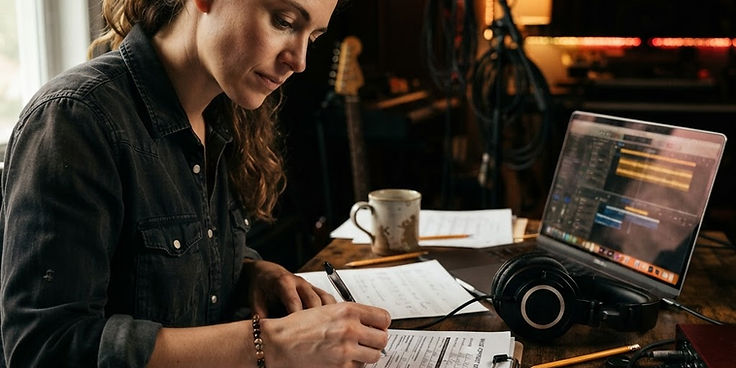
Those producing independent music in Brazil in 2026 face challenges that go far beyond artistic creation. The process of registering an independent song is central to this journey. It moves from the sphere of copyright to also occupy the territory of autonomy, career management, and direct relationships with a market undergoing profound digital transformation.
With the proliferation of releases, the emergence of self-owned labels, and the popularization of digital tools for composing and recording, the need to secure authorship and rights takes on new contours. For independent musicians, registering a song is not just a formality — it is a strategic step that can define the direction of their repertoire and prevent disputes in an increasingly connected and competitive scene.
Practical Reasons to Register an Independent Song in 2026
Formal registration is the only legally recognized way to prove authorship of a musical work in Brazil. For independent artists, this means shielding their creations in the face of the ease of circulation and sharing enabled by the digital environment. Without registration, the work is vulnerable to a scenario marked by misappropriation, authorship disputes, and difficulties in obtaining revenue from public and digital performances.
Beyond preventing plagiarism, official registration is a requirement for registering with publishers, collective management societies, and even digital distribution aggregators—essential for those seeking fair compensation from streaming. In 2026, with the rise of micro-publishers and direct releases, documentation of authorship has become a key factor in negotiations, playlist inclusions, and cultural funding calls. Registration is also a frequent criterion in the analysis of partnerships, synchronizations, and use in audiovisual soundtracks.
Differences Between Independent and Mainstream Registration
Artists linked to major publishers or record labels usually have legal and administrative teams that centralize the process and already guide standardized documentation procedures. The independent creator, on the other hand, must navigate each step of the process alone or with trusted partners: organizing documents, checking the formal requirements of the work, selecting authors and collaborators, defining ownership, regularizing phonograms, and keeping track of the dates that determine legal protection.
The independent context brings the freedom to decide each registration criterion, but also the responsibility to assume possible formal errors and inconsistencies. In the 2026 scenario, this is compounded by multiple creation formats—remote collaborations, AI productions, participation of beatmakers and foreign producers—which add further complexity to proving authorship.
Workflow and Steps to Register an Independent Song
The process starts with a detailed survey of the elements that make up the work: lyrics, melody, arrangement, recording, or demo. In the absence of third-party management, it is up to the artist to gather each file and document, identifying all participants and formalizing percentages of authorship and ownership. The criteria for acceptance follow specific legal and administrative standards, often revised in light of new digital regulations.
After gathering the evidence, the registration request is structured according to the requirements of the competent authority, including the signatures of all authors and a precise description of the protected sections. In cases of doubt or disagreement among collaborators, it is advisable to formalize written agreements detailing co-authorships, samples, and future rights to avoid future disputes.
As the digital environment is now predominant, the basic steps of registration have become almost entirely online, requiring extra attention to protocols, formal requirements, and secure storage of generated files. The risks of technical failures, inconsistent documentation, or file loss have increased, making proper guidance even more essential at every stage of the process.
Analysis: The Impact of Registration on the Independent Artist's Trajectory
Registering an independent song does not limit creative or commercial potential—on the contrary, it expands the artist's possibilities with digital platforms, brand contracts, curatorial selections, and international opportunities. In 2026, properly registered works tend to have greater access to funding calls, synchronizations in audiovisual productions, and licensed soundtracks for games and advertising.
The market recognizes this documentary protection as a prerequisite for professional negotiations, increasing respect for the independent repertoire and facilitating entry into copyright societies. As a result, the artist can negotiate on equal terms with industry players, protecting themselves from potential losses arising from authorship disputes or unpaid royalties.
Practical Implications for Newcomers and Veterans
In Brazil in 2026, the differentiation among independent artists lies largely in the seriousness and professionalism applied to the copyright registration of their works. Keeping up with legislative changes, adjusting contracts, defining ownership, and ensuring that all documentation follows globally accepted standards is fundamental to avoid losses and career blockages, including in international markets.
Veterans feel the weight of constantly updating the rules, while new composers must prepare for more autonomous and digital workflows, which require practical knowledge of rights, files, and administrative routines. Investing in information minimizes risks and ensures that artistic creation gains real legal backing.
Grupo Música 360º Provides Independent Song Registration Services
In the current Brazilian scenario, safely registering independent music requires technical knowledge, interpretation of regulations, and continuous attention to deadlines and details. Grupo Música 360º provides this end-to-end service, offering individualized support at every stage: document analysis, formalization of the work, clarification of doubts about co-authorships, guidance for the digital environment, and assurance that the process complies with current legislation.
The Registrar Música service from Grupo Música 360º was developed to serve both emerging artists and established professionals seeking updates, catalog re-documentation, or adjustments to information in older works. Each step is conducted alongside the artist, avoiding errors that could compromise the validity of the registration or hinder future negotiations. Conflict cases are handled with discretion and technical precision, with dedicated guidance from the specialized team. Contact the Grupo Música 360º team via WhatsApp today and present your project to receive personalized guidance.
By combining practical knowledge and market context, Grupo Música 360º helps independent artists achieve not only legal protection but also economic and artistic protagonism. More than a bureaucratic protocol, registering an independent song means investing in the longevity and value of every creation released in this increasingly fragmented, dynamic, and opportunity-filled environment.
Grupo Música 360º
Sua música também pode chegar mais longe.
O Grupo Música 360º trabalha com divulgação musical e produção de conteúdo para artistas, bandas, produtores e gravadoras. Fale com a nossa equipe pelo WhatsApp e apresente o seu projeto.