
How to Secure Song Authorship in 2026: Safe Paths and Risks in the Digital Landscape
Clarity, registrations, steps and mistakes – what truly protects the authorial identity of Brazilian musical works
Redação Música 360º
Redação Música 360º
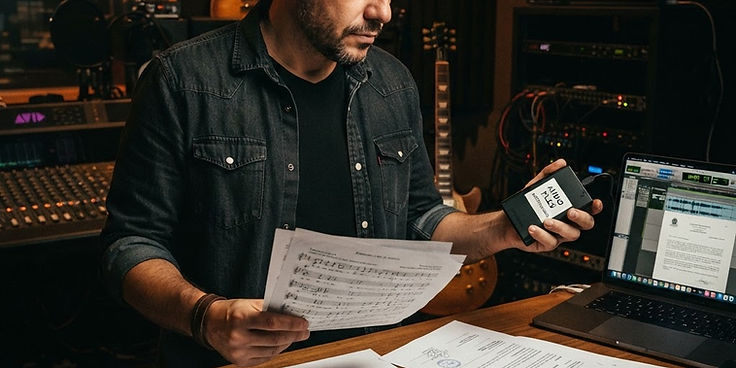
Composers working in 2026 face a paradox: it has never been easier to share new creations, and at the same time, the mechanisms to secure song authorship have never been more complex. Amid advances in artificial intelligence technologies, instant digital distribution tools, and a globally competitive environment, proving, preserving, and shielding the authorial identity of a song has shifted from a mere bureaucratic measure to a strategic necessity.
The importance of securing authorship in the current context
The issue of musical authorship goes beyond creative recognition. In 2026, it is directly connected to the artist’s financial, legal, and even reputational universe. Without unequivocal proof of authorship, there is room for litigation, devaluation of works, insecurity in collaborations, and loss of licensing and sync opportunities. The Brazilian scenario, increasingly inserted into international flows of recordings and scores, demands objective criteria to protect ideas and ensure legitimate rewards.
Court criteria and market expectations
Proving song authorship today requires more than claims or testimonies. Brazilian courts have established strict criteria this decade, accepting as evidence dated documents, formal registrations attesting to the creation’s precedence, and technical evidence of authorship—such as original files and digital traces. The signature of musical identity, identifying timbres, lyrics, and melodic lines, may be recognized by experts, but rarely replaces the presence of official registrations. Recordings and digital files, if produced and archived with mechanisms that prove the exact date, also have value, but their weight depends on the legal integrity of the platform used.
Risks of the digital market and new threats to authorship
The rapid growth of digital platforms has raised a warning: publishing a song before securing authorship is one of the most irreversible mistakes. In 2026, AI algorithms processing millions of tracks daily have increased composers’ exposure to potential automatic plagiarism and unauthorized use. Simply sending an audio file via messaging app guarantees nothing legally. Moreover, informal registration mechanisms via email, popular in previous times, have lost value given current traceability requirements. The main risk is losing control over your own work before even being recognized as the author—especially in co-authorships and partnerships without clear documentation.
Formal registration: what truly proves authorship in 2026
Formalization remains indispensable. Musical registration with entities officially recognized in Brazil is now the unavoidable path to generate robust evidence and increase legal security of authorship. This registration certifies, with date and detail, the author’s primacy over the work’s content, whether lyrics, melody, or both. In legal disputes, this document prevails, making claims based only on personal files or social media posts fragile. It is important to understand that registration is not the same as commercial release or digital distribution, nor does it replace the phonogram’s ISRC—each step has different uses and protections. Coordinated registration is a strategic move even before the first sharing.
Particularities in co-authorship, arrangement, and adaptation situations
A recurring question in 2026 concerns authorship in songs resulting from complex collaborations. Increasingly common, partnerships between composers, beatmakers, performers, and producers generate unprecedented authorial conflicts, especially when there are disputes over credits and percentages. Without clear formalization and a registration that includes all involved, the risk of controversy increases. The market has reinforced the need to notify participation and division of creation at the time of registration. Arrangements and adaptations, in turn, must be differentiated from the original work, always respecting the limits of creativity and avoiding conflicts with the previous authors’ property or moral rights.
International impacts and recognition beyond borders
In 2026, it is not enough to secure authorship only in Brazil. Compositions circulating on international streaming platforms depend on international backing to ensure monetization, recognition, and protection against misuse in other territories. International conventions and directives, such as the Berne Convention, only recognize the author’s precedence with formal documentation admitted in their country of origin. This reinforces the central role of registration and documentation validated by organizations and companies operating in this sector.
Practical paths and common mistakes – what to watch for before and after registration
It is a mistake to underestimate the preparation of evidence and authorship documents. Many artists still rely on simplified mechanisms, betting on informality. In 2026, this means being vulnerable to disputes and even losing rights in repertoires distributed worldwide. Before any disclosure, all creative files from the process should be gathered: notes, lyric drafts, initial recordings, production sessions, and participation agreements. After registration, it is essential to keep documentation always accessible, periodically reviewing the conditions for presentation in contracts and licenses. Another recurring mistake is transferring works without observing the forms of joint registration and the formalized participation of all creators.
Grupo Música 360º: complete solution to secure musical authorship in 2026
Grupo Música 360º’s work in the Register Music category connects the creative universe of artists to the technical, legal, and market requirements that secure authorship in 2026. The service includes a thorough analysis of creative material, organization of all documentation, guidance on credit division, and formalization of registration according to national and international standards. By fully managing the process, Grupo Música 360º offers total protection against common mistakes, reduces litigation risks, and ensures that each step builds irrefutable evidence of authorship.
This comprehensive consultancy not only guides the selection of the type of registration and the best strategy for presenting the work, but also supports the artist in the subsequent management of evidence, co-authorship contracts, licenses, and possible future revalidations. To secure authorial recognition and turn your composition into protected property, contact with the Grupo Música 360º team can be initiated via WhatsApp—just present your project to receive personalized service.
Transformative potential for the artist and the market
Securing song authorship in 2026 is no longer just an administrative step: it has become a central act of intelligence and career strategy. Reliable registration determines who can monetize, negotiate, and expand the presence of the work in different territories and media. In an environment where global circulation happens in real time, investing in this protection is the difference between building a solid legacy and facing endless battles for recognition and resources. More than ever, securing authorship is building your own future in music.
Grupo Música 360º
Sua música também pode chegar mais longe.
O Grupo Música 360º trabalha com divulgação musical e produção de conteúdo para artistas, bandas, produtores e gravadoras. Fale com a nossa equipe pelo WhatsApp e apresente o seu projeto.