
Independent Music Registration in 2026: Protection, Autonomy, and Legal Shielding for Creators Outside the Mainstream
Independent music registration in 2026 proves to be central to the appreciation, security, and sustainability of the autonomous scene in light of the new dynamics of the Brazilian music ecosystem.
Redação Música 360º
Redação Música 360º
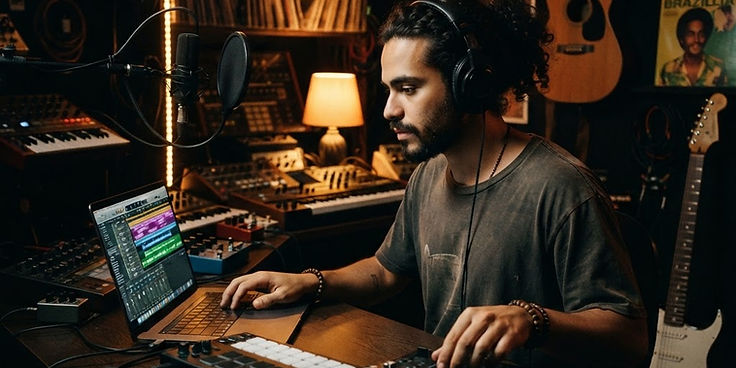
Having your own music securely registered is, in 2026, a structural differentiator for those operating outside major labels and distributors. The movement of the independent scene in Brazil — which accounts for an increasingly larger share of works released on digital platforms — demands solid strategies to protect authorship, enhance catalogs, and avoid litigation, especially in light of advances in distribution technologies and the use of artificial intelligence in creative processes.
The Independent Scene and the Urgency of Registration
In the past five years, the growth of the independent market has redefined the profile of Brazilian music production. According to industry association data, autonomous artists already move significant figures and occupy prominent spaces in playlists, festivals, and national awards. Without the support of major record companies, ensuring authorship and protection of works becomes a direct responsibility of the creator or the collective responsible for the project.
In the 2026 context, the absence of music registration remains a real risk factor for loss of rights, especially in cases of unauthorized use, disputes over authorship, and issues related to monetization on digital platforms and synchronization for audiovisual. Alongside the pursuit of exposure, shielding one’s own compositions is no longer a choice — it has become a prerequisite for career sustainability.
Independent Registration: What’s at Stake
Unlike artists linked to major groups, those who release music independently must deal directly with the bureaucratic and technical steps of registration. The process represents the legal materialization of authorship, practically enabling access to copyright revenues, the ability to claim credits in collaborative releases, and unequivocal evidence in litigation situations.
In 2026, disputes over rights to unreleased songs — whether lyrics, melodies, arrangements, or sound recordings — have become more frequent due to the proliferation of online collaborations and the instant global circulation of works. Independent registration serves as the first line of protection in this scenario: without an official document, claiming authorship can be a long and risky process.
Beyond legal protection, registration directly impacts the artist’s business opportunities. Synchronizations for film, advertising, and games require clear proof of authorship. The same applies to the transfer of rights via collective management organizations or collecting societies. The independent musician who ignores this step may face commercial limitations, platform blocks, or bottlenecks when negotiating contracts.
What Are the Particularities of Independent Music Registration in 2026
The digital revolution has, in recent years, brought simplified paths to registration. But for those outside the mainstream, this advancement requires extra attention to detail. Independent registration must necessarily follow the technical and legal criteria accepted nationally and internationally, involve clear documentation of authorship, signed contracts in cases of co-authorship, and lean towards systems recognized in the copyright universe — even if the artist is not part of major entities.
In 2026, the most evident trend is the automation of steps — digital identification of documents, integration with global databases, and rapid validation of metadata. This, on one hand, reduces bureaucracy for the independent artist; on the other, it increases the responsibility for the accuracy of the information provided. The slightest error can result in invalid, contested, or minimally useful registrations in relevant legal disputes.
Autonomous artists, new authors, and rising creative collectives must also consider the challenges posed by remote collaborations, the use of generative AI, and the multiplicity of platforms involved in the music’s life cycle. Having solid processes for copyright registration is not just a precaution — it is the foundation that allows authorship to be recognized and rewarded in the increasingly dynamic financial and creative flows of the market.
Risks and Common Mistakes: Lessons from the Independent Scene
Among the frequently observed mistakes, the belief that simply uploading music to digital platforms or social networks would guarantee full copyright stands out. In 2026, this misconception remains one of the main reasons for controversies, especially when the unexpected success of a track leads to retroactive disputes over authorship or revenue sharing.
Another recurring problem is the lack of formalization in credit division. Informal partnerships, which were previously resolved by word of mouth, now open the door to long and exhausting litigation if the correct registration of all those involved in the creation is not in place. The degree of professionalism demanded by the market to recognize rights and transfer revenues requires precise documentation aligned with international standards. This is even more demanding for those who depend on the visibility of global platforms, where digital compliance rules are becoming increasingly strict.
How Grupo Música 360º Enables Independent Music Registration
In the 2026 context, the independent music registration service offered by Grupo Música 360º is consolidated as a strategic ally for those seeking protection, security, and commercial enhancement of their creations. The process covers everything from personalized diagnosis of the authorship situation to guidance on documentation, formalization of partnerships, and monitoring of legal trends in the national and international scene.
By centralizing all steps — from technical analysis of files to document preparation and submission to the competent authorities — Grupo Música 360º eliminates bureaucratic barriers and drastically reduces the risk of errors that can compromise authorship recognition. The team keeps up with new challenges arising in the digital era, offering full support also in disputes and emergency situations, which is essential for artists who do not have the backing of large structures.
If you have an original project and need to protect your songs quickly, affordably, and with robust legal backing, the independent music registration service from Grupo Música 360º is the tailor-made solution for the new music landscape. Contact our team via WhatsApp and discover the best way to register, shield, and enhance your authorship in 2026.
The strengthening of the Brazilian independent scene, while boosting creative diversity, increases the complexity of authorship management. In this year’s hyperconnected and competitive environment, independent music registration not only protects the artist’s repertoire, but is also a central piece for unlocking opportunities, professionalizing the career, and sustaining the value of each work in a market driven by data, agile contracts, and global dynamics.
Grupo Música 360º
Sua música também pode chegar mais longe.
O Grupo Música 360º trabalha com divulgação musical e produção de conteúdo para artistas, bandas, produtores e gravadoras. Fale com a nossa equipe pelo WhatsApp e apresente o seu projeto.