
Lyric Registration for Singers in 2026: Strategic Shielding and Authorial Leadership
How lyric registration expands autonomy and consolidates singers’ presence in today’s music scene
Redação Música 360º
Redação Música 360º
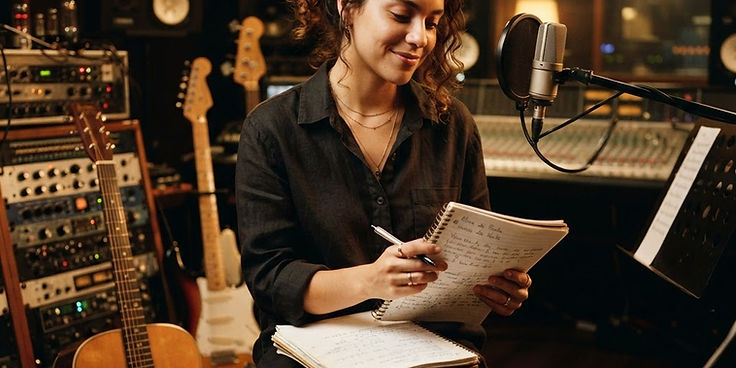
The Brazilian music scene in 2026 presents an unprecedented landscape for singer-songwriters. Unlike the traditional split between composer and performer, the prominence of vocalists who write their own lyrics grows with each cycle—both on digital platforms and on stage. In this context, lyric registration asserts itself not only as legal protection but also as a tool for artistic affirmation. Thus, formally securing authorship over the sung text has become a strategic task, decisive for positioning, value building, and the preservation of rights.
Why singers need to register their lyrics in 2026
In the hyperconnected and fast-paced environment that defines today’s music market, lyric leaks, online collaborations, and the circulation of unreleased demos are common. This new dynamic demands a proactive stance from singers: registering lyrics goes beyond a formal process, serving as a shield against authorship disputes and an extra layer of security against misappropriation—especially when the song has not yet received a phonographic registration or is being negotiated with producers and labels.
Furthermore, 2026 marks a maturity in the debate over the singer-lyricist’s copyright. The battle for recognition is not limited to the courts: streaming platforms, digital distributors, and collective management societies already set objective criteria for remuneration and revenue distribution based on unequivocal lyric registration. The financial impact, therefore, is no longer abstract; it is now tangible in the artist’s monthly income.
Practical aspects and risks of not registering
Ignoring lyric registration can result in loss of authorship, difficulties in proving the original text, and exclusion from rights splits when a work becomes successful—a situation even more sensitive for independent singers. Common mistakes include relying solely on emails, notebook entries, or simply publishing on social media as proof of authorship; such strategies lack consolidated legal validity. Formal registration documents the content, authorship, date, and context, enabling immediate recognition in potential disputes or market conflicts.
Another relevant point is the defense of artistic identity. In the era of features, remixes, and global collaborations, the singer’s lyrics are often subject to adaptations or versions in other languages. Registration protects integrity, prevents unauthorized distortions, and creates legal backing for any claims regarding the use, adaptation, or citation of the original text.
The real registration flow for singers
The lyric registration flow for singers in 2026 follows increasingly rigorous technical criteria. The protocol requires clear presentation of the text, unequivocal identification of the author (or co-authors, if any), personal documentation, declaration of authorship, and, in partnership scenarios, specific agreements on rights division and assignment.
Shielding is strengthened by digital authentication layers: timestamp, digital certificates, and encrypted registration ensure that not only the lyric content but also the authorship and creation date remain immutable and valid in both national and international legal environments. These details make a difference when there are priority disputes or simultaneous versions circulating in the market.
Although the process may seem bureaucratic, its effectiveness depends on well-conducted steps and strict adherence to protocols. Missing documents, submitting incomplete texts, or neglecting to identify authors are recurring problems and can compromise both the validity of the registration and future access to rights.
Historical context and trends for singer-songwriters
In the past, most musicians focused on melody and left lyrics in the background—or delegated their creation to partner composers. With the appreciation of personal discourse, authorial performance, and direct communication between artist and audience, the song’s text has taken center stage in the singer’s identity. This movement is reflected in pop, rap, regional music, and new MPB proposals.
The multiplication of writing collectives, songwriting camps, and international partnerships increases the complexity of registration. Singers who co-write lyrics need to build transparent agreements from the outset, as formalizing co-authorship is already strategic for dividing responsibilities and future rewards. In 2026, shielding the lyrics also means maturing the singer’s role as a full creator—a fundamental position in the new dynamics of the music market.
Practical paths: the role of Grupo Música 360º
The Lyric Registration for Singers service offered by Grupo Música 360º was developed to address exactly the challenges of the current scenario. With experience in the sector and attention to the technical and legal requirements of 2026, the team handles every step: from authorship analysis, document organization, guidance on partnership agreements, to delivering a formalized, valid, and traceable protocol nationwide.
For the singer, delegating this process to a specialized team allows focus on creation, with the confidence that the lyrics are properly protected—even in international contexts and digital partnerships. Grupo Música 360º maintains constant dialogue with the responsible registration bodies, monitors regulatory changes, and implements authentication technologies that robustly shield authorship, recognized by the market and digital platforms.
If you are a singer and write (or intend to write) your own lyrics, the Lyric Registration for Singers service from Grupo Música 360º is the safe path to valuing your work and consolidating your authorial presence, in tune with the best practices of today’s music market. Contact the team via WhatsApp to present your project and protect your lyrics at every stage of your career.
Lyric registration is no longer a distant bureaucracy and has become a tool for artistic leadership and economic security for singers in 2026. Shielding the word that finds its voice is a direct investment in creative autonomy, career longevity, and the affirmation of a unique identity in the Brazilian music scene—whether in urban features, countryside tours, or global playlists. The artist who masters this stage is ready to claim their space, without surprises or future disputes over the voice that writes and sings their own story.
Grupo Música 360º
Sua música também pode chegar mais longe.
O Grupo Música 360º trabalha com divulgação musical e produção de conteúdo para artistas, bandas, produtores e gravadoras. Fale com a nossa equipe pelo WhatsApp e apresente o seu projeto.