
Music Registration for Independent Artists in 2026: Real Protection and Autonomy in the Digital Ecosystem
New Scenario, Old Risks: What Changes for Independent Creators When Registering Music in 2026
Redação Música 360º
Redação Música 360º
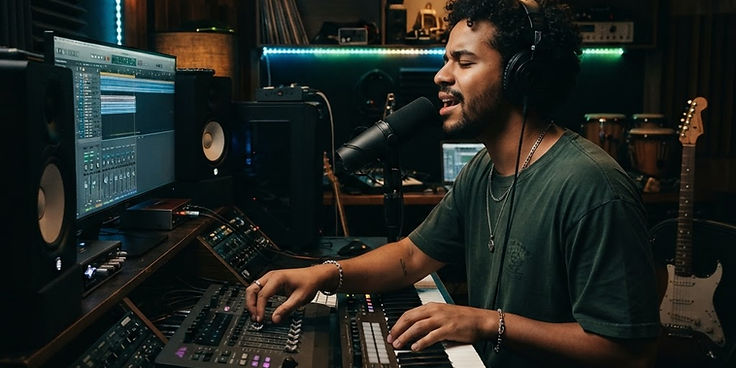
The expansion of original releases in 2026 has consolidated the autonomy of artists outside the major label environment, but it has also intensified the risks: the instant circulation of unreleased tracks on social networks multiplies episodes of plagiarism, legal disputes, and conflicts over true authorship. For the independent creator, especially those who produce and release without intermediaries, music registration has shifted from a dispensable bureaucracy to a key element for the survival and appreciation of their work—in distribution, negotiation, monetization, and defense processes in case of conflict.
Changes in 2026: Independent Creation and the Escalation of Challenges
The independent universe has never been so active nor so vulnerable. With the massive availability of software, virtual studios, and sharing platforms directly to the artist, there is a continuous production of original works that move from the home studio to streaming in a matter of hours. However, this agile flow exposes creators of all genres and profiles to the loss of control over their ideas and compositions, especially when there is no documentary proof of authorship. A properly executed registration not only prevents misuse but also becomes a strategic document for any negotiation—contracts, syncs, co-authorships, collections, and public grants.
Brazilian legislation in 2026 maintains the classic criteria: only the creator or rights holder with registration is recognized as the author, an essential condition for accessing revenues and judicial protection. For independent artists, this step is decisive because disputes—once restricted to the mainstream—now reach the daily life of regional scenes, from rap to electronic forró, from alternative MPB to club techno.
Registration from the Independent Artist’s Perspective
Unlike the traditional universe, where legal teams and publishers centralize processes, the independent creator needs to understand the steps involved, avoid informal pitfalls, and know how to document the work in digitally accepted formats. There is no room for "gentlemen’s agreements" or sending tracks by email in the vain hope of safeguarding rights.
The registration process requires gathering lyrics, sheet music, or recordings, defining ownership, submitting the correct documentation, and obtaining a valid certificate within national territory. Any failure in this chain can compromise the security of the work: filling errors, missing signatures from involved parties, or corrupted files are frequent obstacles detected by Grupo Música 360º over the latest batch of registrations. The result can be tragic: inability to prove authorship in the face of misuse or to claim revenues in collective collections.
Direct Impacts on Creative and Professional Daily Life
Contrary to what many beginners still think, registration does not stifle the creative process nor prevent quick releases. In practice, it enables the artist to publish without fear of having their work stolen or seeing their name excluded from digital payouts—a problem that, in 2026, affects everything from independent playlists to social media ads. Another critical point: works without formal registration are at risk in grant applications, festivals, and sync opportunities, since unequivocal proof of authorship is a prerequisite in all serious selections in the national market.
Registrations also bring advantages in negotiating co-authorships, partnerships, and catalog sales, adding objective value to the work (facilitating participation in development grants, attracting investors, and negotiating directly with audiovisual producers or international labels). In the era of digital traceability, artists who neglect this procedure keep their productions exposed and vulnerable.
Real Risks of Improvisation: Lessons from the Independent Market
The debate around plagiarism, unauthorized use, and "idea theft" has taken on new contours with the ease of digital publishing. Without a legally recognized registration, the independent creator is hostage to long and uncertain legal decisions—it’s the artist’s word against the speed of the internet. The risk is heightened by the normalization of collective beatmaking platforms and remote partnerships, where multiple parties may claim authorship after the unexpected success of a work.
The illusion of a "screenshot" or sending it to oneself by email has never been enough to guarantee authorship. In 2026, courts and distribution platforms prioritize the validity of registration, reinforcing the need for reliable, documented methods aligned with Brazilian technical and legal requirements.
The Music Registration Service of Grupo Música 360º
To address this scenario, Grupo Música 360º fully executes the Music Registration service, offering end-to-end support in critical stages: from guidance on the material to be submitted (lyrics, recordings, arrangements, co-authorships), through documentary assistance, to filing with nationally recognized bodies. Each case is analyzed according to the artist’s profile and the objectives of the work, protecting both unreleased repertoire and circulating catalogs.
Service via WhatsApp connects composers from all regions and styles to a transparent process, without risky shortcuts or unfounded promises, focusing on the details that can save a career from long impasses. Grupo Música 360º works in sync with digital trends, ensuring documentation adapts to new platforms, formats, and integrations already in use in the international market.
If you are an independent artist and want to secure authorship, value, and opportunities for your compositions, contact Grupo Música 360º, present your project, and count on an experienced team to register your music with precision.
New Frontiers and Next Steps in Independent Music Registration
The increase in production, professionalization, and international reach of Brazilian artists demands rigor, agility, and constant updating in the registration process. The trend is that, in the coming years, music registration will continue to evolve to incorporate elements of smart contracts and automated integration with distributors and royalty platforms. But in 2026, the safe path continues to be the combination of qualified advisory, robust documentation, and the use of recognized services in the market.
The creative environment of the independent artist is no longer distinguishable from the mainstream when it comes to the protection of authorship and the right to recognition. Between composing in the bedroom and going viral on streaming, the relevance of music registration has only increased: it is at the root of autonomy, credibility, and the future of those who compose outside the old industry schemes.
Grupo Música 360º
Sua música também pode chegar mais longe.
O Grupo Música 360º trabalha com divulgação musical e produção de conteúdo para artistas, bandas, produtores e gravadoras. Fale com a nossa equipe pelo WhatsApp e apresente o seu projeto.