
Online musical work registration in 2026: security, workflow, and the little-known behind-the-scenes of the process
Understand how online musical work registration works in 2026, from submission to proof of authorship, what really changes with digitalization, and the details few composers know when protecting their creations.
Redação Música 360º
Redação Música 360º
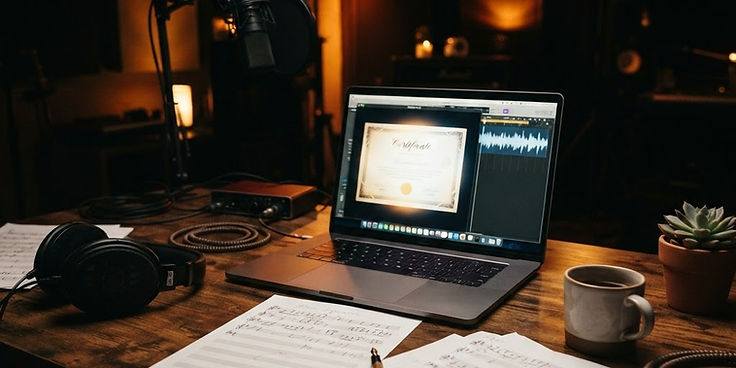
The universe of online musical work registration in 2026 is more dynamic, technical, and demanding than ever. While the ease of access has allowed composers from any part of the country to have the autonomy to protect their work, the increase in digitalization has brought an unprecedented demand for rigor and security at every stage of the process. What appears to be a procedural matter hides essential nuances for the recognition and defense of authorship, often invisible in the daily life of the independent composer.
Online registration as a central step in the musical cycle
Online musical work registration has reached, this year, a level of maturity and reach that already makes it an integral part of the musical market structure. Unlike the era when the procedure was almost an isolated bureaucratic ritual, in 2026 this formalization began to dialogue directly with the digital diffusion of music on streaming platforms, audiovisual synchronization contracts, and international distribution.
The popularity of online registration, accelerated by the new demands for agility and traceability in the digital environment, has also raised the standard of documentation required to prove ownership of works. More than protecting against plagiarism, online registration has become a prerequisite for licensing negotiations, incentive grants, and, above all, for the traceability of revenue in a globalized environment.
Practical behind-the-scenes: what happens from submission to certificate
Registering a musical work online in 2026 involves technical steps that go beyond simply uploading an audio file or score. The process requires rigorous attention to the data entered — full names of composers, creation dates, rights division, and clear identification of the work. Any error, omission, or inconsistency can delay approval or, in extreme situations, compromise the validity of the registration.
The typical cycle begins with registration, followed by the upload of supporting documentation (lyrics, score, recording, co-authorship contracts, when applicable). Next, there is a technical analysis to verify originality (even without aesthetic judgment, this includes automated and manual checks). Once approved, the validated digital certificate becomes the key element in legal disputes and commercial uses. In 2026, the delivery of this certificate has gained layers of cryptographic verification and time-stamping protocols, aligned with international requirements.
Frequent errors and little-discussed risks
The illusion of agility can lead many composers to underestimate critical steps. Providing incorrect data, not saving backups, ignoring attachment requirements, and underestimating the importance of formalizing co-authorship contracts are still among the main reasons for rejection or future questioning of the registration.
Another common mistake is confusing the speed of issuing an online certificate with definitive legal shielding. In litigation, the certificate is only fully accepted when backed by supplementary documentation capable of attesting to the entire history of the work.
The impact of online registration on the composer's daily life
Copyright regularization accompanies all stages of the musical cycle: from launch to licensing, from entry into grants to agreements with publishers. In 2026, a large portion of collective remuneration funds and digital contracts requires prior and adequate copyright registration. This has changed selection criteria in festivals, public grants, and negotiations with brands — which now ask for solid guarantees, going beyond the mere good faith of the author.
Traceability, fueled by digital registrations, also enhances the identification of unauthorized uses, expanding the capacity for rapid response against infringements and automating digital public performance monitoring systems.
Paths to digital registration: avoiding traps and accelerating results
Despite the apparent simplicity of the platforms, online musical work registration requires a multidisciplinary understanding of authorship, neighboring rights, and legal guarantees. Knowing the workflow — and especially the documents that actually have evidentiary value — makes all the difference for the future of the work.
By structuring the request with organized documentation, reviewed data, and clear partnership contracts, the artist positions themselves with more security in future disputes and negotiations. Only then does the digital certificate gain full strength, serving not only as protection but as a valuable asset in the author's portfolio.
The online musical registration service of Grupo Música 360º
Grupo Música 360º delivers an end-to-end online musical work registration service, unifying legal, technical, and market expertise. The team's work goes beyond simple protocol: each step is monitored, from file organization and data review to guidance on co-authorship and contracts, ensuring that the registration meets all legal and practical requirements for the 2026 ecosystem.
With experience in resolving complex cases and a strategic vision of industry trends, Grupo Música 360º reduces the risk of rejection, strengthens copyright protection, and ensures that the composer is prepared for the new market standards. Contact the Grupo Música 360º WhatsApp today to protect your work with rigor and ensure full recognition of authorship.
What changes for the artist who invests in online registration
By understanding and mastering all stages of the online musical work registration process, the artist gains not only protection but a powerful credential to circulate in grants, labels, platforms, and international contracts. Care in formalization translates into autonomy: each protected work expands monetization opportunities and strengthens the author's position in disputes and partnerships, minimizing risks and maximizing the economic potential of the creation.
In an increasingly competitive and globalized market, neglecting online registration is giving up not only legal protection but an essential asset for artistic and financial growth. That is why the professional registration service offered by Grupo Música 360º is established as a strategic differentiator for those seeking durability, value, and respect for authorship in 2026.
Grupo Música 360º
Sua música também pode chegar mais longe.
O Grupo Música 360º trabalha com divulgação musical e produção de conteúdo para artistas, bandas, produtores e gravadoras. Fale com a nossa equipe pelo WhatsApp e apresente o seu projeto.