
Proof of Music Authorship in 2026: Paths to Ensure Recognition in Disputes and Collaborations
Understand the strategic role of musical authorship proof today, its limits, and best practices for creators seeking real protection and credibility
Redação Música 360º
Redação Música 360º
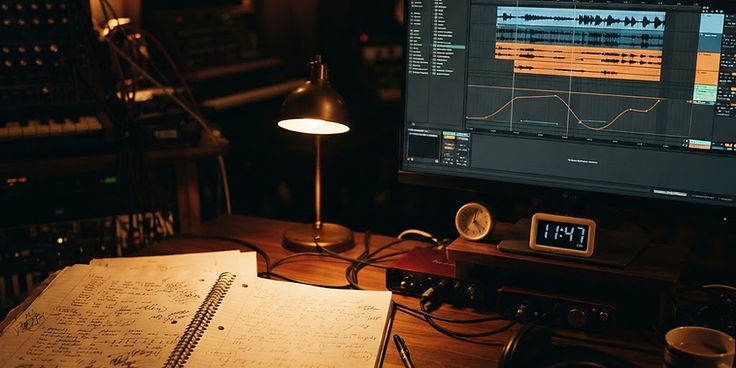
The topic of proof of music authorship has never been as prominent as in 2026. As the music ecosystem has become more digital, disputes over recognition and the division of authorship credits have increased in both number and complexity. For Brazilian creators, securing robust evidence of authorship has become essential both in collaborative partnerships and in defending against unauthorized use and plagiarism claims.
What is proof of music authorship?
Proof of musical authorship is the set of evidence that a composer, producer, or artist gathers to demonstrate that they are the true creator of a musical work. In 2026, this process involves not only traditional methods—such as manuscripts, original recordings, and dated drafts—but also digital tools with date stamps, file versions, edit histories, and metadata linked to the creation.
It is important to differentiate: proof of authorship is not limited to formal registration. It is an arsenal of evidence accumulated throughout the creative process, useful in legal disputes, negotiations, and even in the prior delimitation of shares among partners.
Why has proof of authorship become prominent in 2026?
The leap in remote collaboration, the increase in AI-assisted productions, and the growth of the independent market have changed the dynamics of authorship. If in the past disputes mainly revolved around major hits, today any work—even unreleased or niche—can result in debates about who created, who contributed, and who is entitled to recognition and earnings.
Furthermore, the maturing debate on copyright in Congress and Brazilian courts has led to recent rulings that broadened standards on what constitutes relevant proof, mentioning everything from digital histories to testimonies and blockchain records, when available.
Practical limits: when (and how) proof of authorship is decisive
Proof of authorship is valid both for defending rights in cases of plagiarism or unauthorized use and for supporting co-authorship agreements and ensuring fair division of royalties and credits. But it also has limitations: weak evidence can be challenged, and isolated proof is rarely enough. Ideally, different types of evidence should be gathered, with dates, versions, and consistent testimonies.
Strong proof can avoid lengthy and costly lawsuits, speed up negotiations, and even serve as a differentiator in publishing and recording contracts. On the other hand, disorganized files, lack of witnesses, or missing documentation still prevent many creators from fully exercising their rights.
Methods and technologies: integrating physical and digital evidence
Recent advances, such as digital timestamps and automated version registration systems, have helped strengthen the evidentiary power of digital materials. Music editing software, commonly used to create beats, lyrics, and arrangements, now allows the export of complete creation logs—every modification or insertion is recorded and can be attached to proof protocols.
However, technology does not fully replace documentary prudence. Photos of notebooks, voice recordings, emails exchanged between partners, and specific contracts remain fundamental, especially for content created outside automated platforms or in informal partnerships.
Historical analysis: from signatures to the metadata era
Historically, proving authorship in Brazilian music relied heavily on peer testimony and original manuscripts. Radio and traditional publishers added bureaucratic layers, but the word of those involved carried great weight in judgments.
With the rise of digital, the market began to value independent registration protocols and accept new forms of evidence—but not without legal resistance. In 2026, the importance of metadata and creative flow evidence is growing, as these can be technically audited, even though they do not replace subjective interpretations of what constitutes musical "creation" in collective or AI contexts.
Practical developments: how to shield your music's authorship in 2026
Anyone working in music today needs to think about proof of authorship from the very first note. Organizing files, keeping version histories, documenting interactions and agreements—all of this is part of the routine for artists seeking real protection.
The safest step, however, is to bring this set of evidence into a formal, recognized protocol that adds legal value and credibility—especially in disputes or negotiations with publishers and record labels. Here, rigor in documentation makes all the difference.
The role of Grupo Música 360º in authorship protection
Grupo Música 360º acts as a strategic partner to ensure that each creator can unequivocally prove their musical authorship. Through the specialized Registrar Música service, the team manages the entire process: material analysis, organization of digital and physical evidence, guidance on versions and co-authorship agreements, formulation of documentary protocols, and definition of the best strategies for each case—always considering the latest legal requirements and the particularities of each creative process.
Whether collecting robust evidence before a release, preparing a preventive dossier for future disputes, or structuring documentation in collaborative projects, Grupo Música 360º offers personalized service. The service allows artists, composers, producers, or managers to legally shield their work and boost their credibility in the market. To present your case and clarify doubts, direct contact via WhatsApp streamlines the process and enables tailored solutions.
The pursuit of authorship recognition and protection against disputes is increasingly connected to the ability to document, organize, and articulate technical and creative evidence. In 2026, it is not enough to create: it is necessary to build a track record, history, and demonstrate authorship on multiple fronts. This is the new standard of protection for those who want to thrive in the Brazilian and international music ecosystem.
Grupo Música 360º
Sua música também pode chegar mais longe.
O Grupo Música 360º trabalha com divulgação musical e produção de conteúdo para artistas, bandas, produtores e gravadoras. Fale com a nossa equipe pelo WhatsApp e apresente o seu projeto.