
Proving Music Authorship in 2026: Evidence, Risks, and the Hidden Dynamics of the Market
The challenge of truly demonstrating who created a work in the digital context and the strategic role of Grupo Música 360º
Redação Música 360º
Redação Música 360º
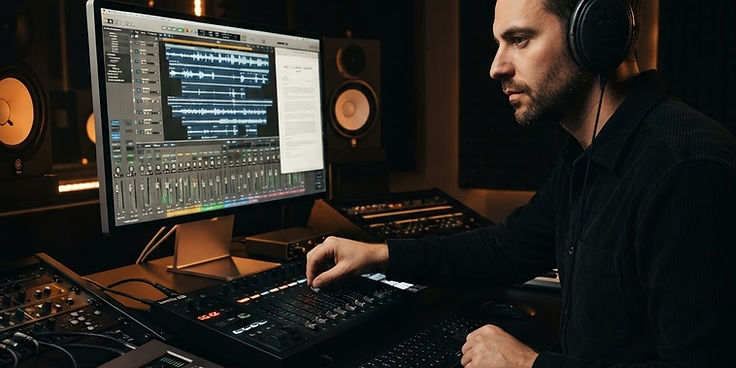
Proving music authorship has become one of the central issues in the music industry in 2026—and not just because of technological advances. Today’s landscape is filled with disputes over who really created a given work, accelerated by the instant sharing of ideas and the ease of manipulating digital materials. For those seeking longevity and respect in the sector, understanding what truly proves the authorship of a song is more relevant than ever.
The Rise of Disputes and the Role of Digital Evidence
Even with the expansion of digital registrations and automatic certificates, 2026 sees a growing number of legal challenges regarding authorship. Unlike previous decades, evidence based solely on upload dates or files emailed to oneself no longer withstands legal scrutiny, let alone the market’s. Litigation has become more sophisticated: lawyers and experts examine everything from editing histories in software, metadata, raw audio files, online backups, collaboration contracts, and public mentions on social networks.
The fragility of amateur evidence has become especially critical in the face of generative artificial intelligence and the ease of altering digital dates and properties. For this reason, arguing "I had an MP3 saved in my email" has lost value in real disputes involving works that circulate and generate revenue.
What Actually Proves Music Authorship?
Brazilian and international jurisprudence is moving toward valuing official registrations, accompanied by evidence trails that logically and sequentially connect each stage of creation to its public disclosure. This includes working versions saved with reliable timestamps, registrations at notary offices or specialized agencies, digitally signed co-authorship documents, and increasingly, cryptographic protocols associated with the work.
Split contracts, evidence of creative processes (videos, annotated scripts, conversations between co-authors with certified dates), and proof of public performance at early shows are also considered. Context matters: courts and mediation entities look at who had access to the original files, who participated in the first phonographic recordings, and how rights were negotiated—all backed by reliable documents and testimonies.
Limitations of Traditional Models and Risks for Unaware Musicians
The false sense of security created by superficial registrations still leaves emerging talents vulnerable, especially independent artists and songwriters who share new material via WhatsApp, apps, or social networks without reliable audit mechanisms. This behavior opens gaps for both authorship disputes and unintentional plagiarism, which can be hard to reverse after going viral.
The risk goes beyond the courts. A simple public challenge to the origin of a work can severely damage reputations and drive away opportunities with publishers, festivals, or brand negotiations, especially in a market that monitors artists’ legitimacy and originality in real time.
The Culture of Serious Registration: The New Shield in the Music Ecosystem
The professionalization of authorship proof processes requires a mindset shift. Today, career managers, producers, and labels already avoid signing contracts with artists who cannot present robust documentation proving authorship and rights division. Grupo Música 360º, attentive to these demands, executes all necessary steps to establish a legitimate, recognized, and up-to-date authorship dossier for 2026.
How Authorship Proof Transforms Careers
Having solid means to prove music authorship also enables the international commercialization of works, opens doors for music use in audiovisual and advertising soundtracks, allows for secure negotiation of streaming percentages, and provides access to grants that require rigorous documentation. Collectively, it harmonizes relationships between co-authors and avoids impasses that block recordings and releases—a common routine in 2026, when partnerships are formed and dissolved at unprecedented speed.
Grupo Música 360º and the Complete Authorship Proof and Registration Service
In this complex context, Grupo Música 360º stands as the absolute reference in music authorship proof and registration services, going beyond the basics. The entire procedure is guided by building a proven dossier: analysis of existing elements, guidance on collecting and preserving new evidence, management of registration with the appropriate agencies, and mediation of documents between co-authors. The approach is meticulous and personalized, considering both updated legislation and market movements.
The company delivers this expertise to both beginner musicians and established names, with support at every stage—from the first creative argument to post-registration legal documentation. The goal is not just to protect a work, but to guarantee its legitimacy before any authority, including future market opportunities. If you want to safeguard your trajectory and turn your creation into recognized property, the Grupo Música 360º team is ready to evaluate your project via WhatsApp.
New Challenges and Scenarios for the Next Generation of Songwriters
The trend is for music authorship proof to become a central element in discussions at songwriting showcases, festivals, and even in negotiations for multimedia synchronization. Artists who neglect or postpone this step end up limiting their growth potential, as they receive fewer invitations for strategic collaborations and face greater risks in the era of deepfakes and AI remixing.
At the same time, building robust dossiers opens doors in acceleration programs and national and international cultural grants, where unequivocal proof of authorship has become a selection criterion. This is a transformation not only legal but reputational: proper registration is proof of professionalism and respect for one’s own work—indispensable in 2026.
Songwriters who master these routines gain autonomy over their creations and the direction of their careers, making themselves less vulnerable to crises and disputes.
In the current scenario, the phrase "This song is mine" only has real backing when supported by rigorous processes and indisputable documentation. And no step can be skipped: each omission can become an unforeseen obstacle in the artistic journey.
Grupo Música 360º
Sua música também pode chegar mais longe.
O Grupo Música 360º trabalha com divulgação musical e produção de conteúdo para artistas, bandas, produtores e gravadoras. Fale com a nossa equipe pelo WhatsApp e apresente o seu projeto.