
Registering Music in 2026: Steps, Challenges, and Trends in the Brazilian Market
How music registration keeps pace with industry evolution and why it has never been so strategic for independent artists
Redação Música 360º
Redação Música 360º
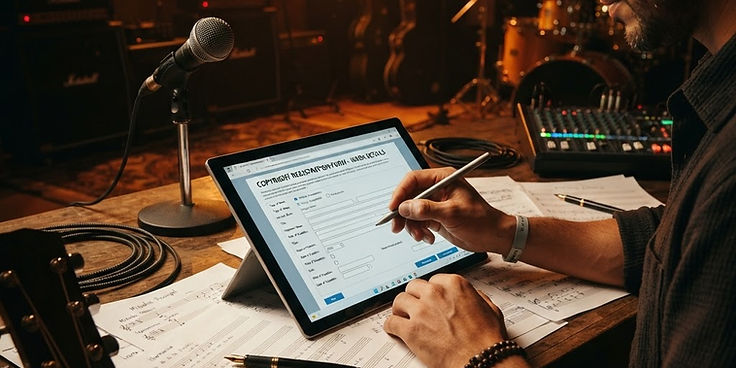
Registering music in 2026 is not just a legal requirement: it has become a central step for professionals who want to safeguard their careers from the very start of creation. In a sector marked by a record volume of digital releases, efficient registration is an indispensable tool both for those seeking fair remuneration and for those building a legacy.
What Changes When Registering Music in 2026
The integration of digital registration systems into the production chain has a direct impact on musicians' daily lives. Notably in Brazil, the partnership between systems such as the Escritório Central de Arrecadação e Distribuição (Ecad) and authors' societies — ABRAMUS, UBC, and others — has intensified in recent years. Now, the path from creation, upload, and rights protection is more dynamic: a composer can start the registration request from platforms connected to the ISRC, avoiding traditional gaps in royalty transfers.
Until two years ago, registering music depended almost exclusively on authors' societies. In 2026, digital platforms began offering features that make this process even more efficient, facilitating the simultaneous upload of works and sound recordings with pre-filled documentation. This change benefits everyone from independent composers to publishers more attentive to innovation. Still, the procedure remains indispensable: registration continues to be the main proof of authorship in legal disputes and the path to revenue collection via streaming, radio, concerts, and soundtracks.
Registration as a Career Strategy
In the independent scene, the absence of registration is often the vulnerable point in new artists' planning. In 2026, the proliferation of releases requires musicians to see registration as the beginning of the cycle: without it, entering official playlists, obtaining audiovisual licensing, or ensuring international distribution becomes unfeasible. Music platforms aggregate features that cross-reference authorship and sound recording registration data, reducing historical identification errors and increasing the chance of remuneration for performances.
By analyzing the recent experience of creative collectives and bands, a trend is noticeable: registration is now done as a group, right at the start of composition, avoiding future conflicts when there are changes in project lineups or disputes with collaborators. This movement reflects the maturation of a generation that sees rights management not as bureaucracy, but as part of artistic planning.
Current Challenges: Bureaucracy, Costs, and Lack of Information
Despite digitalization, challenges persist, especially for those outside major urban centers. Technical barriers — such as difficulty accessing high-speed internet or even costs to join authors' societies — still limit new composers. Another obstacle is the lack of guidance on the different types of registration: authorship, sound recording, arrangements. Confusing these elements can lead to loss of revenue or, worse, loss of authorship itself.
Music education in 2026 still suffers from a lack of public initiatives aimed at clarifying creators' rights. Many enter the market imagining that simply uploading to digital distributors replaces formal registration, which does not correspond to practical reality — legally, only registration with recognized entities has decisive evidentiary value.
How to Register Music the Right Way in 2026
The recommended path starts with joining a collective management association, such as UBC, ABRAMUS, Amar, or Sicam. After affiliation, the online system is used to enter the work's information: title, authors' names, performers' data, and possible co-authors. Ecad itself compiles information for the ISRC (the international standard code for identifying music), ensuring worldwide traceability of performances.
For sound recordings — the recordings of a work — registration runs parallel to authorship, protecting both producers and artists. The advancement of platforms like Soundreef and the arrival of specialized Brazilian startups allow for the integration, in a single dashboard, of the management of performance, sound recording, and authorship rights, signaling a trend toward decentralization of these steps.
The Practical Impact for Artists and the Market
Having a registered work is, in 2026, a prerequisite for inclusion in soundtracks, advertising campaigns, audiovisual synchronizations, and cultural grant applications. In public calls, proof of registration has become a mandatory criterion for project submission, reducing cases of subsequent legal disputes.
The Brazilian market is seeing a consistent increase in demand for professionals and startups specializing in rights consultancy. More and more artists, when registering works, are already submitting them to international portals, aiming for licensing on global streaming platforms. The internationalization of registrations, in fact, is starting to guide collaborations between Brazilian and foreign entities, expanding revenue horizons.
Analysis: Registration as a Career Asset
In the multifaceted scenario of 2026, where each digital play can turn into cents — or legal disputes — treating music registration as an asset, not an expense, represents a turning point in artistic careers. Brazil, historically relevant in global authorship production, needs to balance bureaucracy with digital fluidity and design policies aimed both at creator protection and market dynamism. The trend is that, in the coming years, distribution platforms themselves will include automatic registration in new releases, bringing the country in line with European and U.S. markets.
Grupo Música 360º's work intensifies this movement: by building bridges between artists, managers, and the public, we broaden the debate on registration, rights, and sustainability in the sector. In 2026, the portal maintains special attention to strategic topics — from the registration of singles and albums to monitoring international trends.
Promoting efficient registration, in addition to ensuring revenue, projects artists for media opportunities, exclusive interview features, and greater relevance in festival and concert coverage. Grupo Música 360º offers promotional services, interviews, and special features that boost the visibility of artists with their music properly protected and registered. If you want to strengthen your music promotion and launch your project with professional support, contact our team via WhatsApp to present your work and discover promotion opportunities in both the independent and mainstream scenes.
Proactively handling music registration in 2026 is much more than preventing problems: it is about consciously and respectfully inserting yourself into an industry that, each year, demands more clarity, information, and strategy from creators who wish to establish themselves in a global market.
Grupo Música 360º
Sua música também pode chegar mais longe.
O Grupo Música 360º trabalha com divulgação musical e produção de conteúdo para artistas, bandas, produtores e gravadoras. Fale com a nossa equipe pelo WhatsApp e apresente o seu projeto.